Why the UV Index Is Higher in Some Places
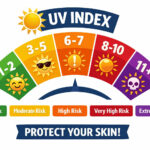
“Wondering why the UV Index is higher in some places than others? It all comes down to location, altitude, time of day, clouds, and even the ozone layer."
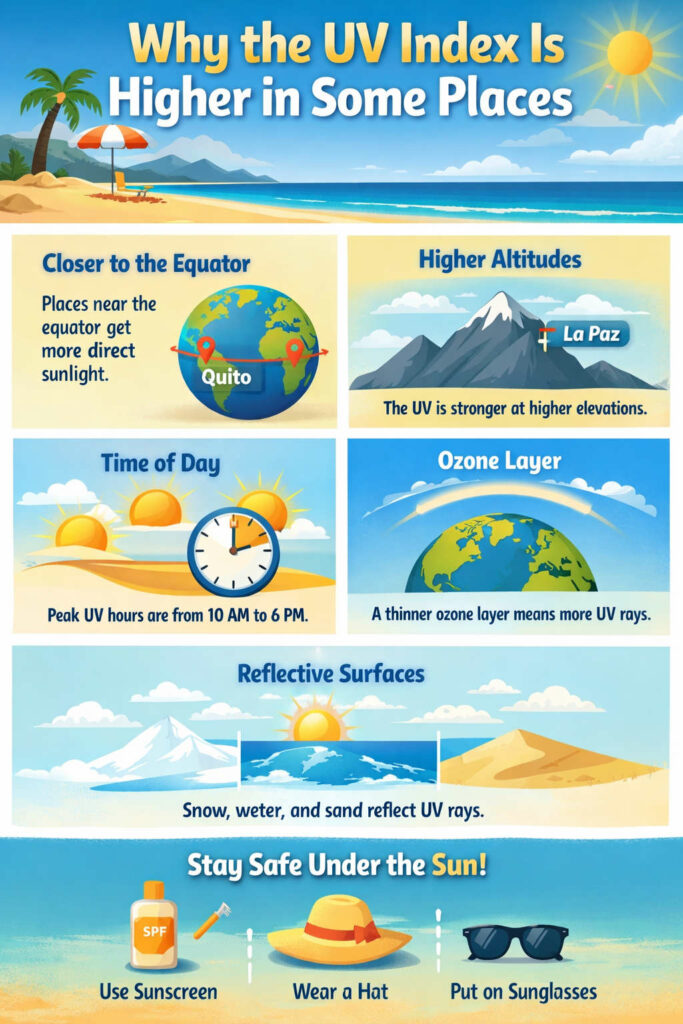
Have you ever checked the weather app and noticed the UV Index is much higher in one place than another ? You might wonder why the sun feels stronger at the beach than in your hometown. Let’s talk about it in a simple way.
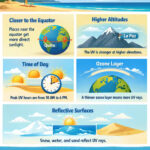
One big reason the UV Index is higher in some places is how close they are to the equator. Places near the equator, like Quito or Singapore, get more direct sunlight all year. The sun is higher in the sky there. When the sun is directly above you, its rays travel a shorter distance through the air. That means more UV rays reach your skin.
Now think about places far from the equator, like London or Oslo. In these places, the sun is often lower in the sky, especially in winter. The sunlight has to travel through more of the atmosphere. This blocks or weakens some of the UV rays. So the UV Index is usually lower.
Another reason is altitude. The higher you go, the stronger the UV rays become. If you visit a mountain city like La Paz, which is very high above sea level, you may notice your skin burns faster. That’s because there is less air above you to block the UV rays. Even if the temperature feels cool, the sun can still be very strong.
Clouds also play a role. Many people think clouds always protect them from the sun. That is not fully true. Thin or light clouds can still let a lot of UV rays pass through. In some cases, broken clouds can even reflect UV rays and make them stronger for short times. So a cloudy day does not always mean a low UV Index.
The time of day matters too. Around midday, usually between 10 a.m. and 4 p.m., the sun is highest in the sky. This is when the UV Index is often at its peak. Early morning and late afternoon usually have lower UV levels because the sun is lower.
The condition of the ozone layer also affects UV levels. The ozone layer sits high in the sky and helps block harmful UV rays. In places where the ozone layer is thinner, more UV radiation can reach the ground. For example, areas closer to Antarctica sometimes experience higher UV levels during certain times of the year because of ozone thinning.
Finally, surfaces around you can change how strong UV feels. Snow, sand, and water can reflect sunlight. That is why you can get sunburned while skiing or sitting near the ocean, even if you feel cool.
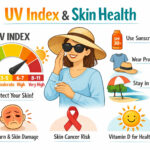
So when you see a high UV Index, it’s not random. It depends on location, height above sea level, time of day, clouds, and even the ozone layer. Knowing this helps you stay safe. A little sunscreen, a hat, and sunglasses can make a big difference.