UV Index and Skin Health: What You Should Know
“When we talk about skin health, one small number can make a big difference: the UV Index. You may have seen it in your weather app next to the temperature. It looks simple, but it tells you a lot about how strong the sun’s rays are and how careful you need to be."
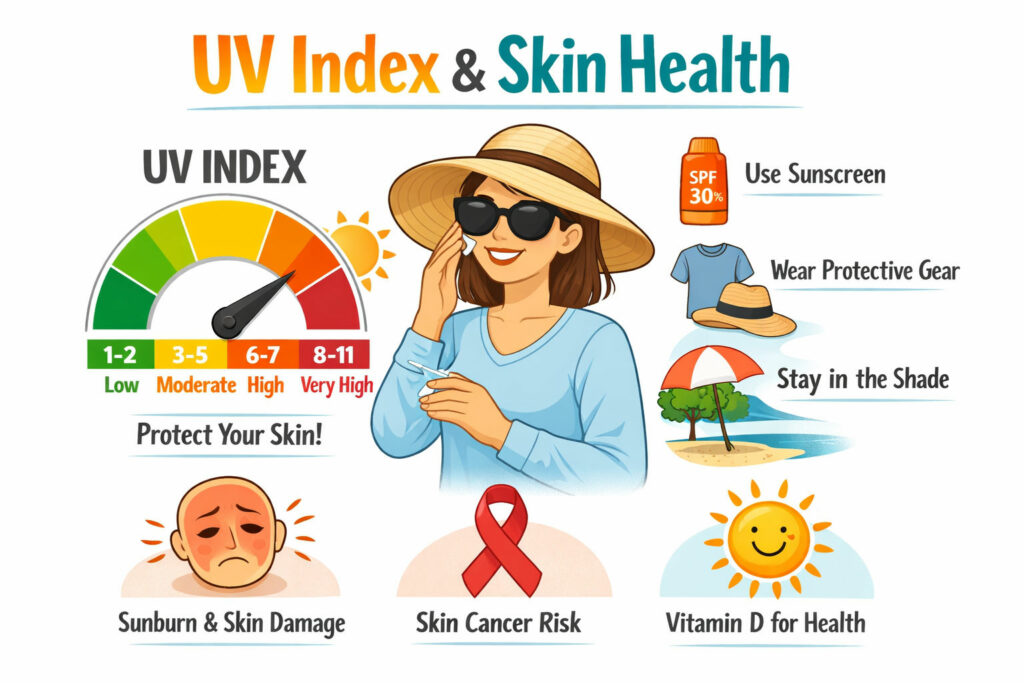
The UV Index measures the strength of ultraviolet (UV) radiation from the sun. UV rays are invisible. You can’t see them, and you can’t feel them right away. But they can still hurt your skin. The higher the UV Index number, the faster your skin can burn.
Let’s break it down in a very simple way.
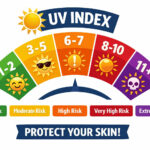
If the UV Index is low, like 1 or 2, the risk to your skin is small. You can usually spend time outside without much worry, especially if you are only out for a short time. But once the number goes up to 3, 4, or 5, your skin can start to burn if you stay in the sun too long without protection.
When the UV Index reaches 6, 7, or higher, you need to be careful. At these levels, your skin can burn in as little as 15 to 30 minutes. If the number is 8, 9, or even 10 or more, the sun is very strong. You should limit your time in direct sunlight, especially in the middle of the day.
You might think sunburn is the only problem. But it’s not.
Too much UV exposure can cause early aging. That means wrinkles, dark spots, and loose skin. Over many years, too much sun can also increase your risk of skin cancer. This is why checking the UV Index is not just about avoiding pain today. It’s about protecting your skin for the future.
So what can you do when the UV Index is high?
First, use sunscreen. Choose one with SPF 30 or higher. Put it on 15 to 30 minutes before you go outside. Don’t forget your ears, neck, and the tops of your feet. Reapply every two hours, or sooner if you are swimming or sweating.
Second, wear protective clothing. A wide-brim hat can protect your face and neck. Sunglasses can protect your eyes. Long sleeves and light pants can also help, even in warm weather.
Third, try to stay in the shade when the sun is strongest. This is usually between 10 a.m. and 4 p.m. If you can plan your outdoor time for early morning or late afternoon, your skin will thank you.
You don’t have to avoid the sun completely. Sunlight helps your body make vitamin D, which is important for your bones and overall health. The key is balance. A little sun is good. Too much is harmful.
Before you go outside each day, take a quick look at the UV Index. It only takes a few seconds. That small step can help you decide: Do I need sunscreen? A hat? More shade?
Think of the UV Index as a friendly warning. It’s not there to scare you. It’s there to help you make smart choices. Your skin is with you for life. Taking care of it today will help it stay healthy and strong for years to come.