Stay Safe in the Sun: Preventing Skin Cancer
“Let’s talk about something very important but often ignored: skin cancer and UV rays."
I’m not here to scare you. I just want us to understand what’s really happening when we spend time in the sun.
First, what are UV rays?
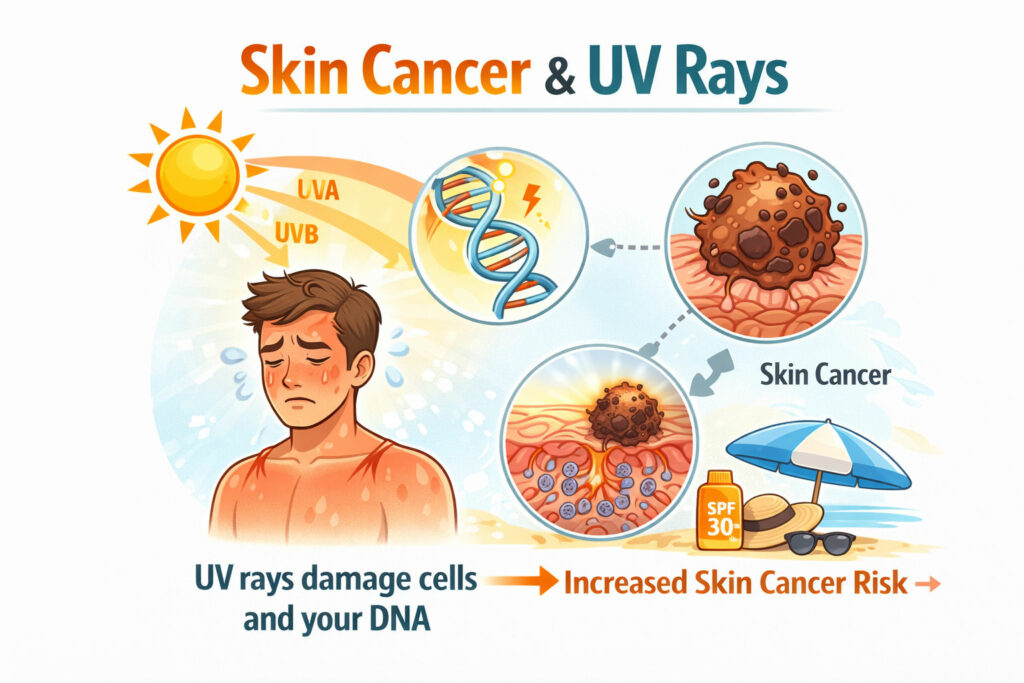
UV stands for ultraviolet. These are invisible rays that come from the sun. You cannot see them. You usually cannot feel them right away either. But they are powerful. When UV rays hit your skin, they go deep into the skin cells.
There are two main types that affect us: UVA and UVB rays.
UVA rays can age your skin. They cause wrinkles and dark spots. They are also linked to skin cancer. UVB rays are the ones that cause sunburn. When your skin turns red and painful, UVB rays are usually the reason. Both types can damage your skin cells.
Now here’s the important part.
When UV rays damage your skin cells, they can change the DNA inside those cells. DNA is like the instruction book for your body. If the instructions get damaged, the cells may start to grow in a strange way. Over time, this can turn into skin cancer.
Skin cancer is one of the most common types of cancer in the world. It can happen to anyone. It does not matter if you are young or old. It does not matter if your skin is light or dark. Some people have a higher risk, but everyone needs protection.
There are different types of skin cancer. Some grow slowly and are easier to treat if found early. Others can grow faster and spread to other parts of the body. That is why early detection is so important.
You might think, “I don’t burn easily, so I’m safe.” But that’s not true. Even if your skin does not turn red, UV rays can still cause damage. Tanning is actually a sign that your skin is trying to protect itself from injury.
Also, skin damage builds up over time. One day at the beach may not seem like a big deal. But years of unprotected sun exposure can add up.
The good news? You can lower your risk.
Start with sunscreen. Choose one with SPF 30 or higher. Put it on every day if you spend time outside. Even on cloudy days, UV rays can reach your skin. Reapply every two hours, especially if you are swimming or sweating.
Wear protective clothing. A wide hat can protect your face and neck. Sunglasses protect your eyes. Light long sleeves can help too.
Try to stay in the shade when the sun is strongest. This is usually between 10 a.m. and 4 p.m. If you plan outdoor activities in the early morning or late afternoon, your skin will be safer.
Also, check your skin regularly. Look for new moles or spots. Watch for changes in size, shape, or color. If something looks different or strange, see a doctor.
We all enjoy sunny days. The sun makes us feel good. But we need to respect it. Taking care of your skin today can protect your health for many years. A little protection now can make a big difference later.